









The Zika virus, transmitted by the Aedes aegypti mosquito, has become an epidemic designated by the World Health Organization as a Public Health Emergency of International Concern.
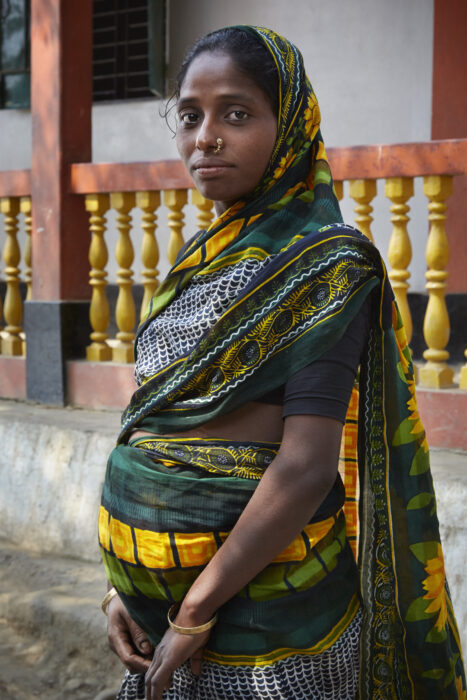
The effects of the disease are becoming increasingly known: in children born to infected mothers, it is linked to microcephaly, an abnormality associated with impaired brain development. Because its spread is largely confined to low- and middle-income countries, it disproportionately affects the world’s poorest and most vulnerable people, with the greatest impact on infants and their mothers.
The spread of the Zika virus is the type of high-stakes problem that the Grand Challenges approach is well-suited to solve. At the core of this approach are bold ideas with big impact. For Grand Challenges Canada, this means supporting on-the-ground innovators and entrepreneurs from low- and middle-income countries. Other important pillars of the approach are investment in high-risk science, smart collaboration, and integrated innovation that brings together technological advances with business and social innovation.
A network of organizations – which includes Grand Challenges Brazil, the Bill & Melinda Gates Foundation, Grand Challenges Canada (funded by the Government of Canada) and the United States Agency for International Development (USAID) – is using the Grand Challenges approach to tackle Zika.
Grand Challenges Brazil
As the epicentre of the Zika epidemic, Grand Challenges Brazil has incredible incentive to act on Zika. Indeed, Grand Challenges Brazil has taken to setting the global agenda for the Zika epidemic.
A workshop held in April 2016 by the Ministry of Health of Brazil, the Bill & Melinda Gates Foundation and the National Council for Scientific and Technological Development gave a network of global health actors the opportunity to identify and highlight current research gaps. Not surprisingly, better diagnostics and surveillance tools surfaced as priorities, and strung throughout the workshop’s agenda were the notions of coordination and collaboration to accelerate discovery.
Perhaps most importantly, these concepts were raised by Brazilian stakeholders, innovators, researchers and scientists – local stakeholders with drive and experience to become advocates in the fight against Zika. This kind of local entrepreneurship is necessary to create lasting, sustainable and effective global health solutions.
Bill & Melinda Gates Foundation
In 2003, the Bill & Melinda Gates Foundation set in motion the current movement of Grand Challenges with the Grand Challenges in Global Health. One of the original grand challenges goals was to control insects that transmit agents of disease.
Scott O’Neil, an Australian innovator from Monash University, advanced a bold idea and was funded under the Grand Challenges program in 2005 for his project involving infecting A. Aegypti mosquitos with a bacterium known as Wolbachia. An infection with Wolbachia renders the mosquito unable to transmit Dengue and Chikungunya viruses. Fortuitously, Wolbachia-infected mosquitos are also highly resistant to infection with Zika virus, have lower viral load and, importantly, do not carry the virus in their saliva (and are therefore unable to transmit)!
Field research has expanded to Rio de Janeiro, with releases of Wolbachia-infected mosquitos in the districts of Jurujuba and Tubiacanga. Notably, this incredible technological innovation has an important social aspect – breeding of Wolbachia-infected A. Aegypti happens in backyards and school grounds – and requires intensive community engagement. It is currently one of the most promising innovative technologies to fight Zika.
Grand Challenges Canada
In May 2016, Grand Challenges Canada teamed up with the Consortium for Affordable Medical Technologies (CAMTech) and the Massachusetts General Hospital’s Center for Global Health to host the Zika Innovation Awards, which granted $25,000 CAD to each of six promising innovations responding to the Zika crisis:
- AHEAD kit: A kit to build home-made mosquito traps, educational materials and reporting software
- Kulinda: Fashion-forward protective apparel for women and girls
- LarvaFinder: A smartphone add-on device that detects mosquito larvae in stagnant water
- Larvicide Automatic Dispenser (LAD): A prototype that keeps residential water tanks larvae-free
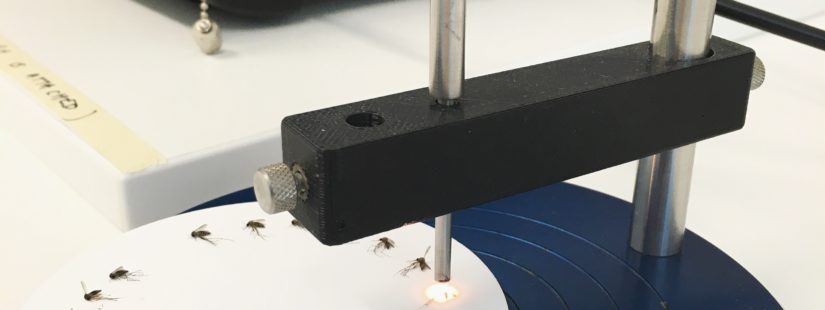
- Near-Infrared Spectroscopy (NIRS): A technique for rapid detection of Zika and Dengue in Aegypti mosquitos
- Zika Screening Using a Low-Cost Biosensor: A saliva-based Zika test, analyzed with a smartphone app.
Grand Challenge Canada’s pipeline of seed innovations, funded as Stars in Global Health, has proved a fruitful source for scaling innovations (see below) and Grand Challenges Canada is evaluating further Zika innovations to transition to scale.
Further, Grand Challenge Canada’s emphasis on Saving Brains may unfortunately become all too relevant to Zika. With regard to the virus, Dr. Peter A. Singer, Chief Executive Officer of Grand Challenges Canada, said, “Zika is a threat to the future of children and a threat to the human capital of countries severely affected. I am worried about the more subtle effects on newborn brains beyond microcephaly. Innovation is needed to combat these new threats; we don’t want to wake up in 15 years to realize we have been asleep at the switch.”
USAID
USAID has placed a call for the generation of cutting-edge technological approaches to fight the Zika epidemic, called “Combating Zika and Future Threats: A Grand Challenge for Development”. To answer the challenge, innovators must focus on three core elements:
- Prevention – developing novel vector-control strategies, affordable personal and household protection, and safety measures for emergency healthcare workers
- Detection – improving surveillance of disease vectors; upgrading local clinical and laboratory systems; simplifying and improving diagnostics for disease
- Response – utilizing community engagement: informing, mobilizing and empowering communities to participate in surveillance, deployment of vector control and personal protection.
USAID’s approach has demonstrated that the Grand Challenges approach is nimble enough to use in the face of a public health emergency. From nearly 900 submissions, USAID has invested over $15 million US to accelerate deployment of 21 promising innovations across the following six categories: Vector Control, Personal/ Household Protection, Vector Surveillance, Community Engagement, Disease Surveillance and Diagnostics. View the press release and full list of investments here.
Three of these innovations – Near-infrared Spectroscopy to Detect Transmission Hotspots, Low-cost Treated Sandals to Prevent Bites and Low-Tech Treated Fabric for Outdoor Use were funded at seed by Grand Challenges Canada as Stars in Global Health. The USAID program also provides ongoing funding for the Wolbachia project funded by the Bill & Melinda Gates Foundation.
Conclusion
Sharing the results of these explorations, regardless of whether they succeed or fail, is a powerful way to amplify the effects of the Grand Challenges approach. Although often envisioned as operating in separate organizations, the Zika experience shows how the parts of Grand Challenges innovation are complementary and interconnected. Grand Challenges Brazil provides country leadership in science. The Bill & Melinda Gates Foundation made a long-term investment in Wolbachia (originally targeting dengue), which is now one of the most promising and fundamental innovations against Zika. Grand Challenges Canada provided seed funding to innovations (mostly against other diseases) that are now being supported and scaled up against Zika (by USAID). USAID has launched a Zika-specific challenge and, as such, is making a major contribution to moving forward 21 innovations so far. This type of collaboration shows significant potential in combatting public health crises to optimize impact and minimize duplication of efforts, and demonstrates how Grand Challenges initiatives can work together to create a global innovation system. Perhaps, through the use of a multi-faceted, integrated and collaborative Grand Challenges approach, Zika can be better understood and quickly halted to save and improve many of the poorest and most vulnerable lives worldwide.
Join the conversation on Twitter with #WWWeek. We encourage you to post your questions and comments about this blog post on our Facebook page Grand Challenges Canada and on Twitter @gchallenges.