






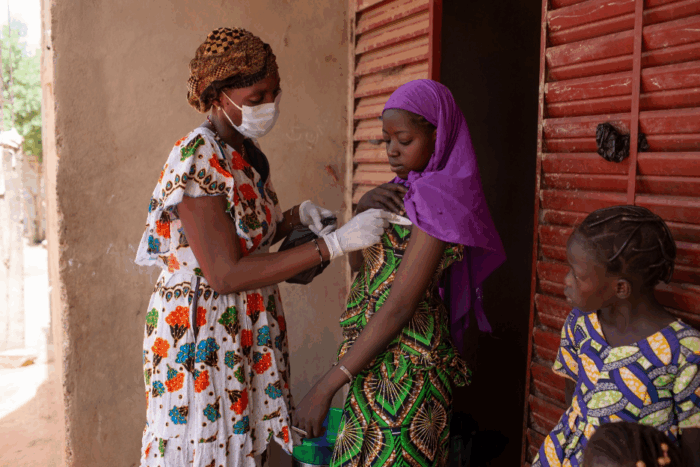

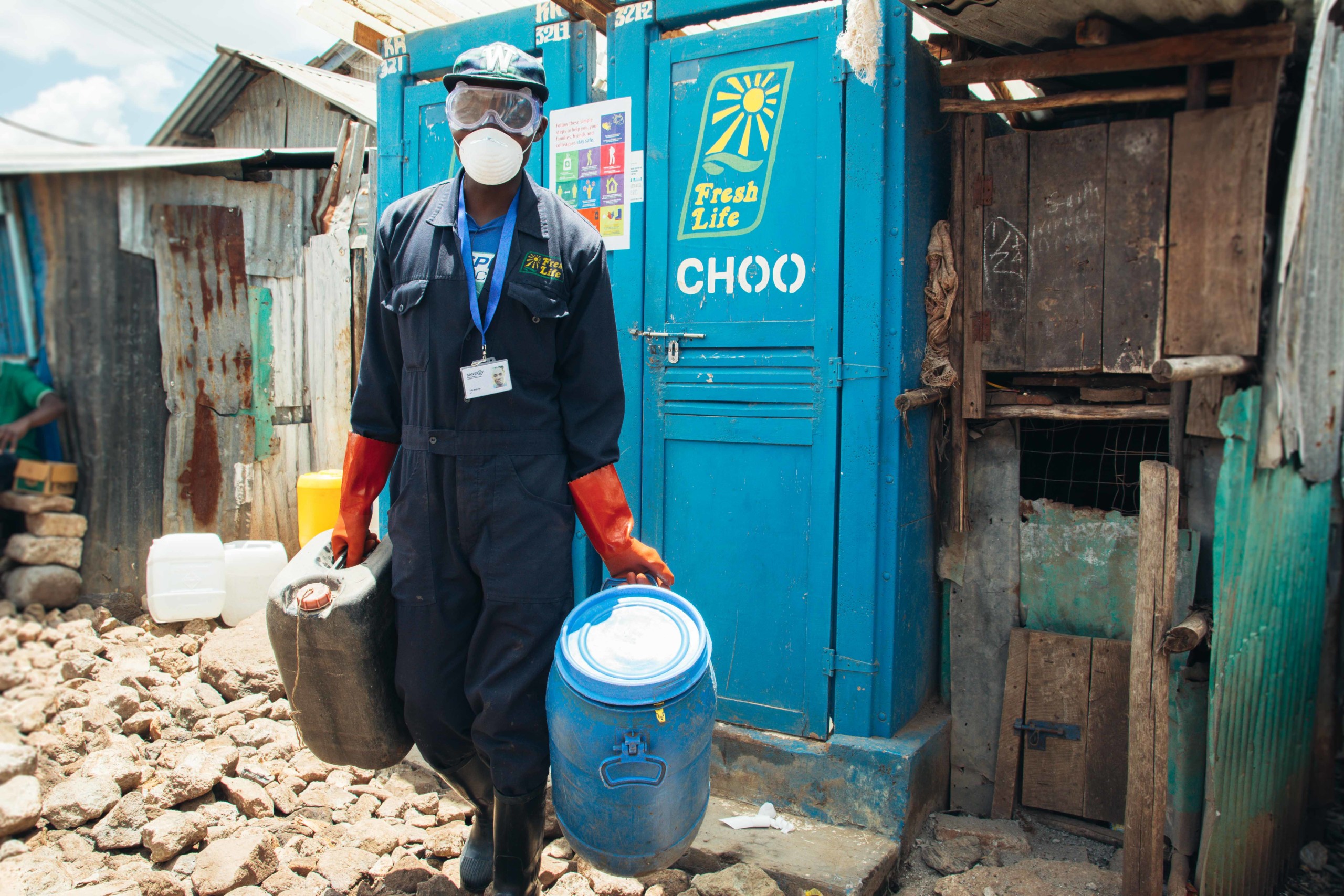

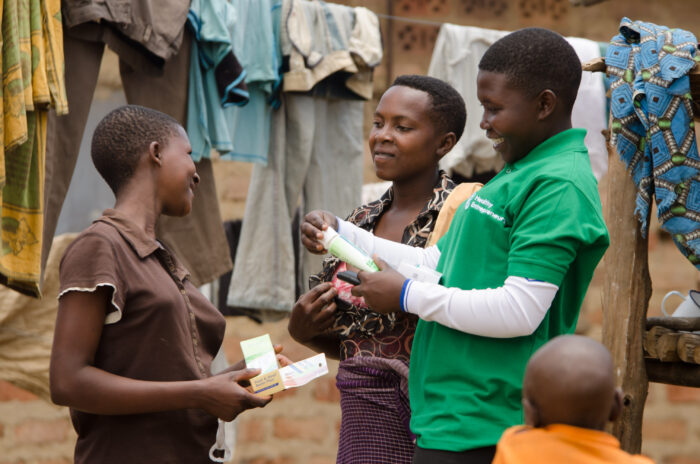








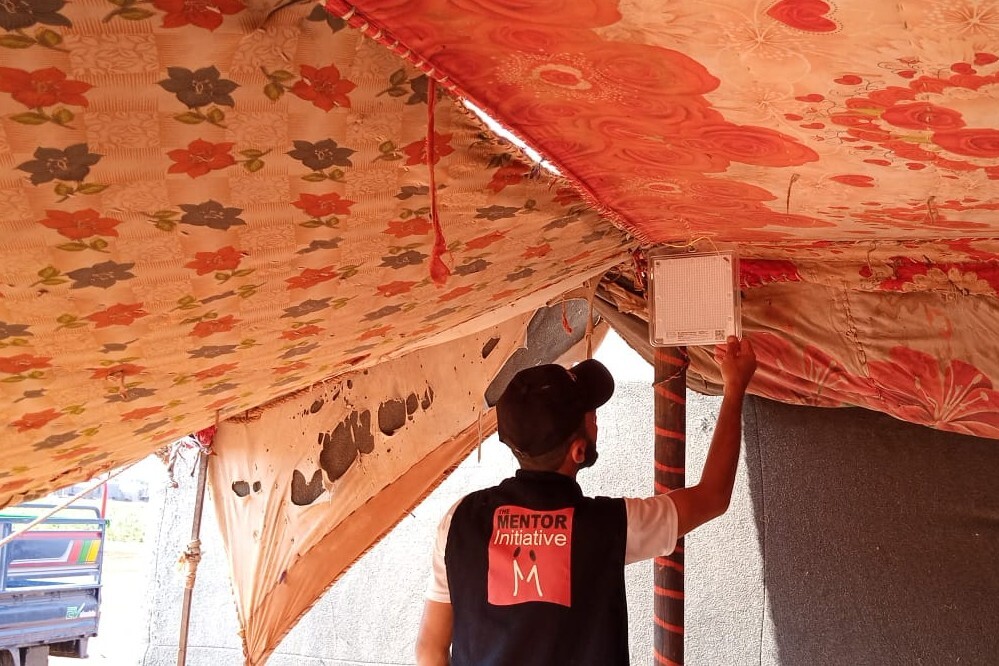
The MENTOR Initiative, supported by Creating Hope in Conflict: A Humanitarian Grand Challenge (in partnership with the UK’s Foreign, Commonwealth & Development Office), is addressing these pressing challenges in collaboration with SC Johnson in places like Syria, Yemen, and Nigeria. Through scalable and life-saving spatial insect repellent tools that cost as little as $2.00 per year, without the need for electricity, they are keeping communities in emergency settings safe from vector-borne disease.
Testing a new class of tools for vector and disease control in Syria
In Syria, 14 years of ongoing conflict have displaced over 16 million people, with 7.2 million among them remaining internally displaced. For people living in displacement camps in Syria, unsafe and unstable living conditions have significantly increased the prevalence of the vector-borne disease leishmaniasis, which is transmitted through sandflies.

Leishmaniasis is endemic in Syria and is a parasitic disease spread by sandfly bites that can cause devastating skin ulcers or, in severe cases, life-threatening damage to organs like the liver and spleen. As of 2019, a total of 89,357 cases of leishmaniasis in Syria have been reported.
While traditional interventions to fight the disease exist, such as indoor residual spray, high costs, resource demands, and limited humanitarian access to implement such interventions leave millions of vulnerable people unprotected.
With two Proof-of-Concept investments from Creating Hope in Conflict: A Humanitarian Grand Challenge (CHIC), Grand Challenges Canada’s flagship humanitarian portfolio, The MENTOR Initiative piloted two of SC Johnson’s innovative spatial repellent tools among conflict-affected communities across Syria, helping to save countless of lives from leishmaniasis.
“CHIC gave us the seed funding to test the first-ever proof of concept of this tool in conflict-affected contexts. It’s now creating the biggest stir in the disease-control world, because it’s the first new class of tool for disease control in my lifetime.” Said Dr. Richard Allan, Founder of the MENTOR Initiative.
Developed in partnership with American multinational manufacturer of household cleaning supplies and consumer chemicals, SC Johnson, the MENTOR Initiative distributed and tested:
- The Mosquito Shield™: the first-generation spatial repellent tool. It’s shaped like a thin piece of plastic and contains a chemical called transfluthrin. By gradually emitting a vapour into the air, transfluthrin confuses insects, impacting their nervous systems and their appetite, repelling them and helping control vector-borne disease. With its insect repelling effects lasting for about one month, the Mosquito Shield™ was designed with vulnerable populations in mind, making it adaptable and easy to use in any setting, including temporary shelters such as tents and places where electricity is not available.
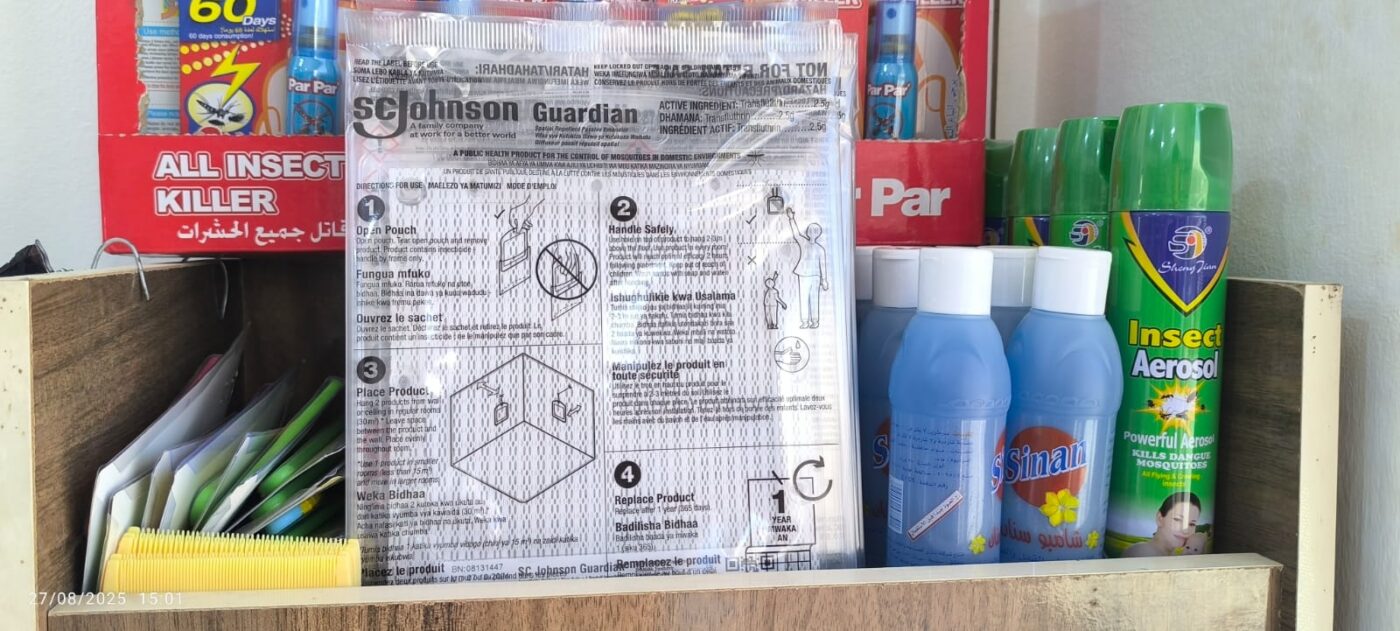
- The Guardian™: the second generation of the spatial repellent products. It is a mesh in a plastic frame and can emit a stronger dose of transfluthrin to offer protection from vector-borne disease for up to one year.
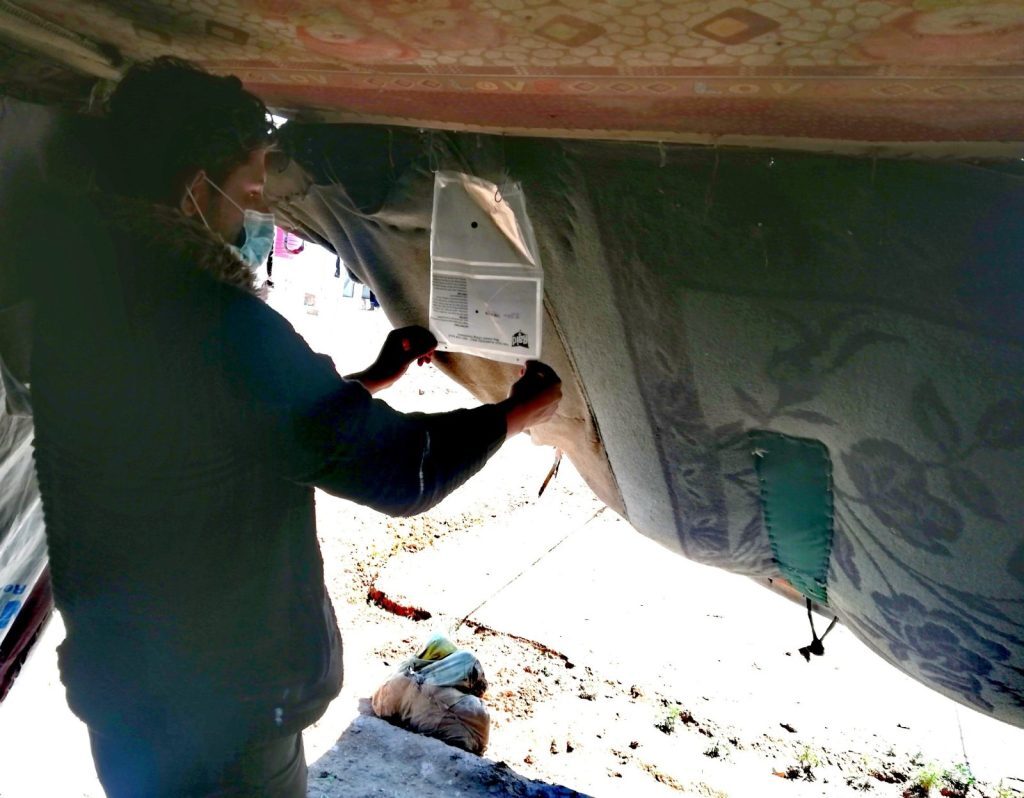
“The Mosquito Shield™ tool is very easy to use. It’s a piece of plastic that you can hang. It’s light, it’s easy to distribute, and it’s ultimately easy to put through a supply chain for market scale-up. But most of all, it’s highly effective,” says Sergio Lopes, CEO of the MENTOR Initiative. “The Guardian™ tool reflects how our spatial repellents have evolved over time, using the same insecticide but through a different mode of action that extends protection against disease. People really find and report the tool as being highly efficient. They are keen to buy and replace it to have continuous protection over time.”
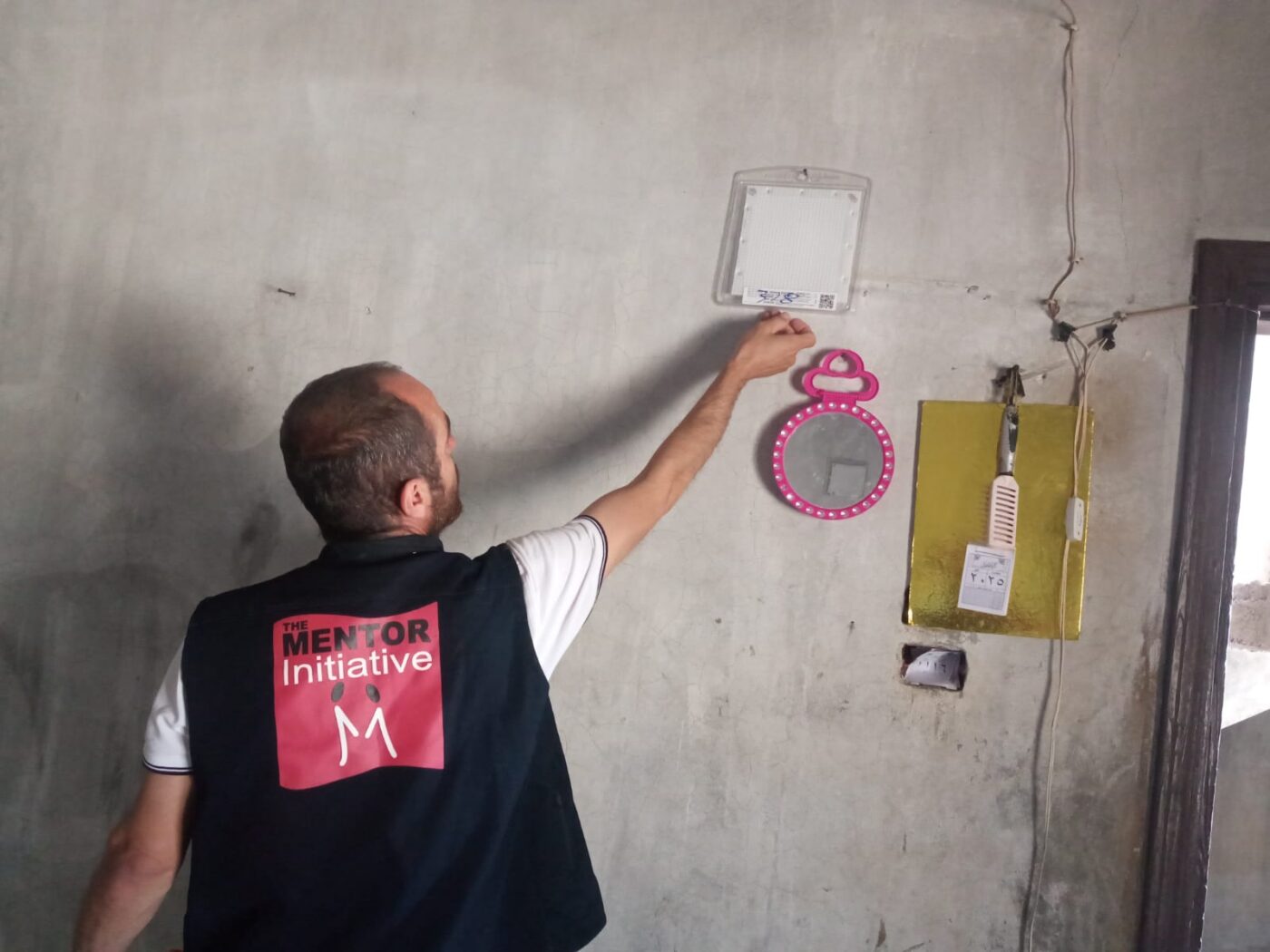
Unlike other vector-borne disease control tools like mosquito nets, which help protect against insect bites while one sleeps, or a mosquito coil, which relies on daily interaction by the user and a source of heat to light it, the Shield™ and the Guardian™ provide 24-hour protection without any further daily requirement from the user once installed. Additionally, unlike internal residual spraying, the MENTOR spatial repellent tools can be used by anyone, without the need for a technical team or operational management, which is often challenging to plan and/or implement in emergencies.
In Syria, both tools are distributed by the MENTOR Initiative free of charge for vulnerable communities living in displacement settings. Their physical design allows for easy and lower transportation costs, which makes them a viable marketable product. To increase financial sustainability, they are also available for anyone to purchase through the MENTOR Initiative’s retail partners in Syria for approximately $0.30 per month for a Mosquito Shield™ (just over $3.60 per year) and $2.50 per year for a Guardian™ tool. In humanitarian contexts, these costs for a disease prevention tool represent significant savings if it helps avoid the much higher cost of disease treatment.
Driving impact and scaling vector-borne disease control in emergencies
With the initial Proof-of-Concept investment from CHIC, the MENTOR Initiative evaluated the effectiveness of the Mosquito Shield™ in reducing cases of leishmaniasis and sandfly density in seven internally displaced camps in Northern Syria. The MENTOR Initiative determined that there was not only a high uptake of the tool among users, indicating commercial viability, but they also demonstrated the effectiveness of the Shield™, resulting in a 48% reduction in leishmaniasis cases.
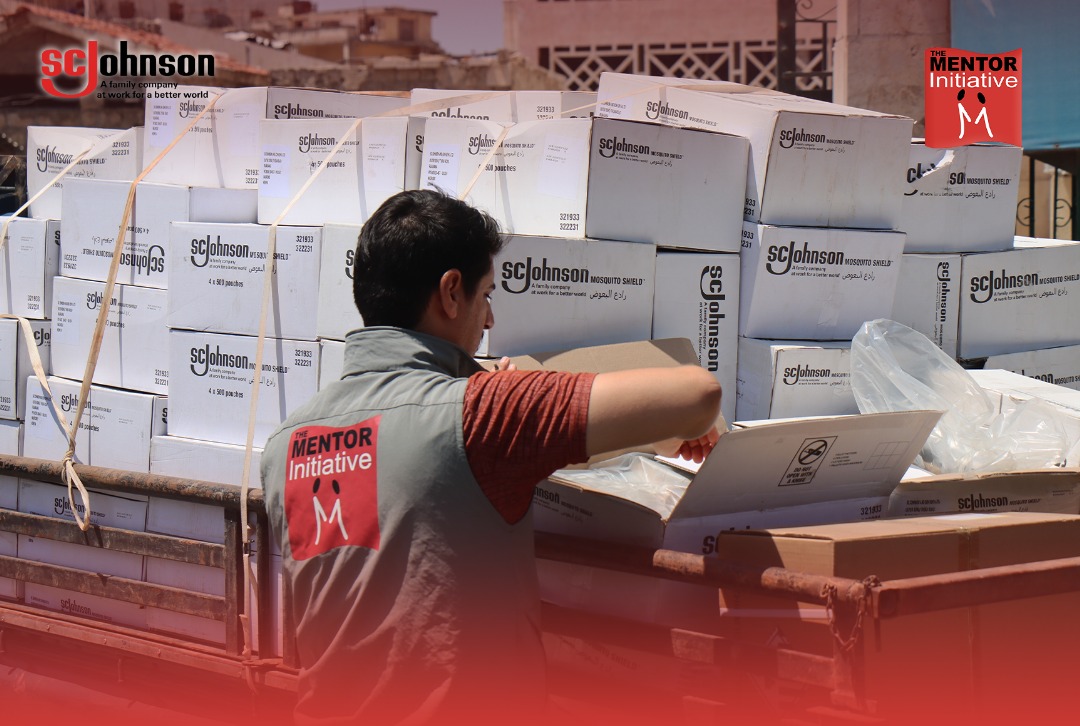
With ongoing Transition-to-Scale investment from CHIC, the MENTOR Initiative has now distributed over 200,000 Shield™ and 100,000 Guardian™ spatial repellent units free of charge to households in displacement camps across Syria, helping protect over 100,000 people from leishmaniasis.
For the MENTOR Initiative, GCC’s investments have helped unlock public investment and scale the tool in other countries to test its efficacy in combating multiple vector-borne diseases.
“For us, it’s been about unlocking funding for further research, unlocking funding in other countries for deployment, and working with GCC has really unlocked our entry-point into proving what can be done in a country’s new, open commercial system.” Said Dr. Richard Allan.
The spatial repellent tools have been replicated in other conflict-affected communities in Yemen and Nigeria, with various trials and research being conducted to determine the tools’ usability and efficiency in preventing other diseases like dengue, and malaria. In August 2025, the MENTOR Initiative and SC Johnson also secured a WHO policy recommendation for their Shield™ and Guardian™ tools to help prevent vector-borne disease.
Lessons from private-sector partnerships in humanitarian innovation
The partnership between the MENTOR Initiative and SC Johnson has been mutually beneficial. For the MENTOR Initiative, manufacturing support and backing from SC Johnson has been crucial to develop and widely distribute SC Johnson’s life-saving spatial repellent tools. For SC Johnson, the MENTOR Initiative’s expertise working in humanitarian settings, offered valuable lessons in marketability.
“We’ve been working and learning with SC Johnson – what does it mean to take a product into a commercialized accessible marketplace, not just as a humanitarian distribution tool. For any investment we make and for generating new health solutions, there must be a pathway beyond distribution. People don’t stay in the same setting, and people need to be able to access tools long after the humanitarian sector has moved away. We need to be able to buy the tools we need in the same way as we do food.” Said Dr. Richard Allan.
“Our envelope tools came as a natural response to the need for new tools for controlling vectors, mosquitoes and flies. The private sector has been seeking these kinds of innovations which are easy to use and are effective.” Said Sergio Lopes, CEO of the MENTOR Initiative.
Working with commercial sector partners presents an opportunity for humanitarian innovators to integrate tools and products into the supply chain, allowing anyone to access the necessary tools to protect their health in a store.
As for what the private sector has to gain from partnering with humanitarian innovators, Dr. Richard adds, “If it works in emergencies, it will work anywhere. We are the toughest proving ground in the world, and that is why the commercial sector that works with us respects us because they know that if they can create proof of concept where we are, they will have a marketplace globally.”
What’s next for the MENTOR Initiative?
As the MENTOR Initiative progresses further along its scaling journey, the team looks towards continuing to test and refine the efficacy of their tools in preventing other vector-borne diseases, such as dengue and malaria, to prove that their Shield™ and Guardian™ tools are efficient in multi-vector disease control.
While humanitarian distribution remains necessary, the MENTOR Initiative aims for greater market integration and is exploring strategies such as online media campaigns to acquire new retail partners. It also continues to monitor perceptions and uptake of the tool to help establish relations with more commercial distributors and manufacturers, thereby creating a lasting supply chain.