


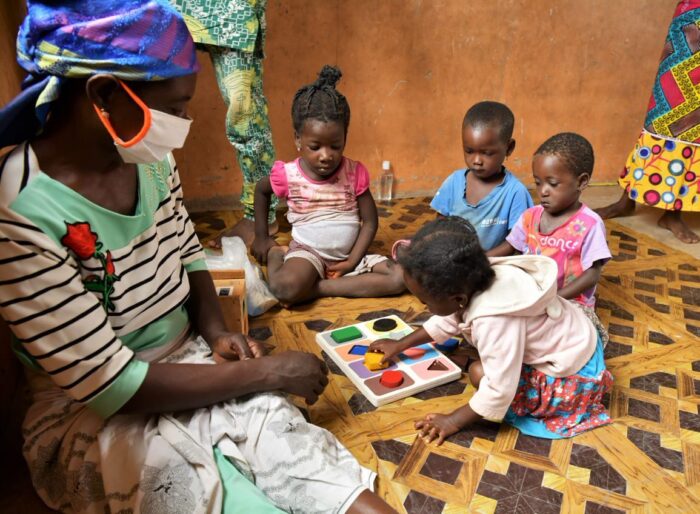
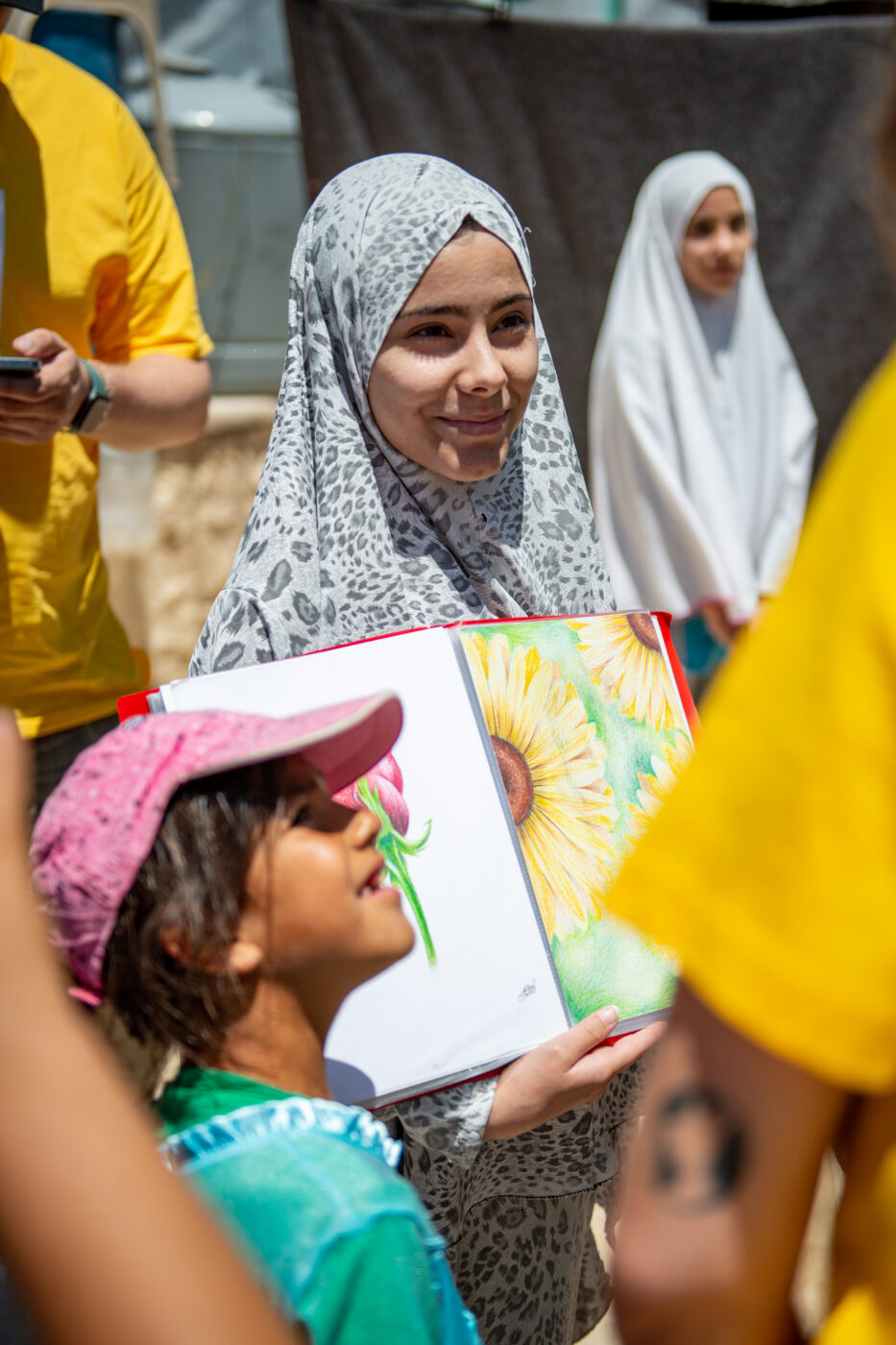
Play-based learning is a powerful approach that promotes healthy growth and fosters the acquisition of knowledge, thinking skills, and essential personal characteristics needed to navigate an ever- changing future. It is one of the most powerful tools for learning, healing, and development for children, yet they face disrupted schooling, limited learning, and development opportunities, and have few safe spaces to play and grow in peace. Climate change further intensified displacement 3 million children in the past six years. Displacement impacts essential family and community support systems and deprives children of nurturing care and safe learning environments essential for their holistic development.
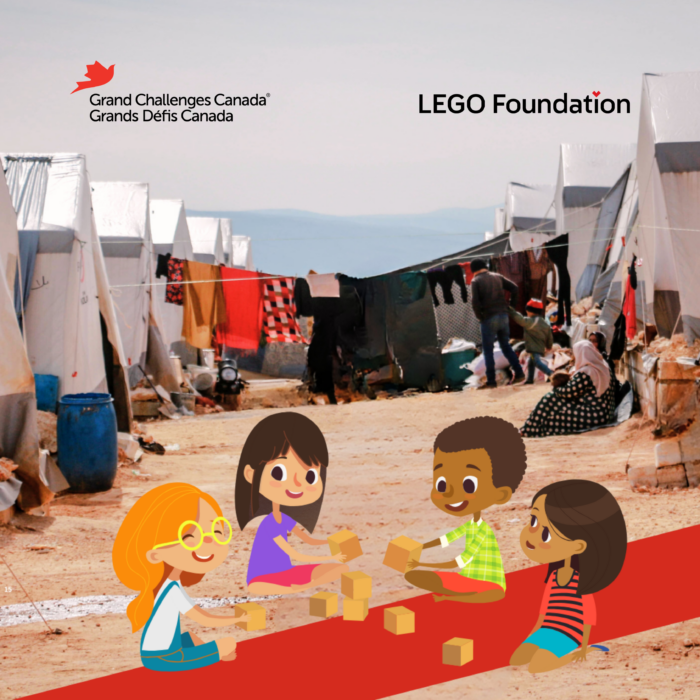
Play Learn Thrive, led by Grand Challenges Canada, in partnership with the LEGO Foundation, invests in bold ideas for children and the key figures in their lives in complex crisis settings. From refugee and displacement settlements to contexts facing complex crises areas, we are investing in bold ideas to strengthen learning, resilience and wellbeing for children and their caregivers across Jordan, Lebanon, Uganda, and Kenya through the power of play — ensuring their educational and developmental needs are met, even in emergencies.
Innovations in Jordan and Lebanon Advancing Play-Based Learning
Children growing up in Lebanon and Jordan face significant barriers to education and safe spaces for learning and play.
In Lebanon, overlapping economic and political crises have strained the education system, leaving many refugee children, many of them Palestinian refugees, with limited access to quality schooling and play.
Meanwhile, Jordan hosts one of the largest refugee camps in the world: the Al-Zaatari refugee camp, where many families face ongoing challenges in accessing consistent, quality education and environments where Syrian refugee children impacted by displacement can thrive and learn.
We are investing in innovations across Lebanon and Jordan that will create learning spaces for children aged 4 to 12; fostering community-based learning opportunities, and accessible learning spaces that support the education, development, and right to play of displaced children.
In Jordan:
- Project Asobi, implemented by Abu Alanda Association for Social Development, introduces a creative approach to early learning in under-resourced kindergartens in Southeast Amman. The program trains female educators as “Asobi fellows”, equipping them with a curriculum that combines Japanese origami techniques with Arabic storytelling. Through “Fold & Play” activities, children aged 4-5 develop fine motor skills, early math understanding, and social-emotional learning. At the same time, teachers gain new professional skills and confidence. Caregivers are also engaged through at-home folding activities that prolong learning beyond the classroom.
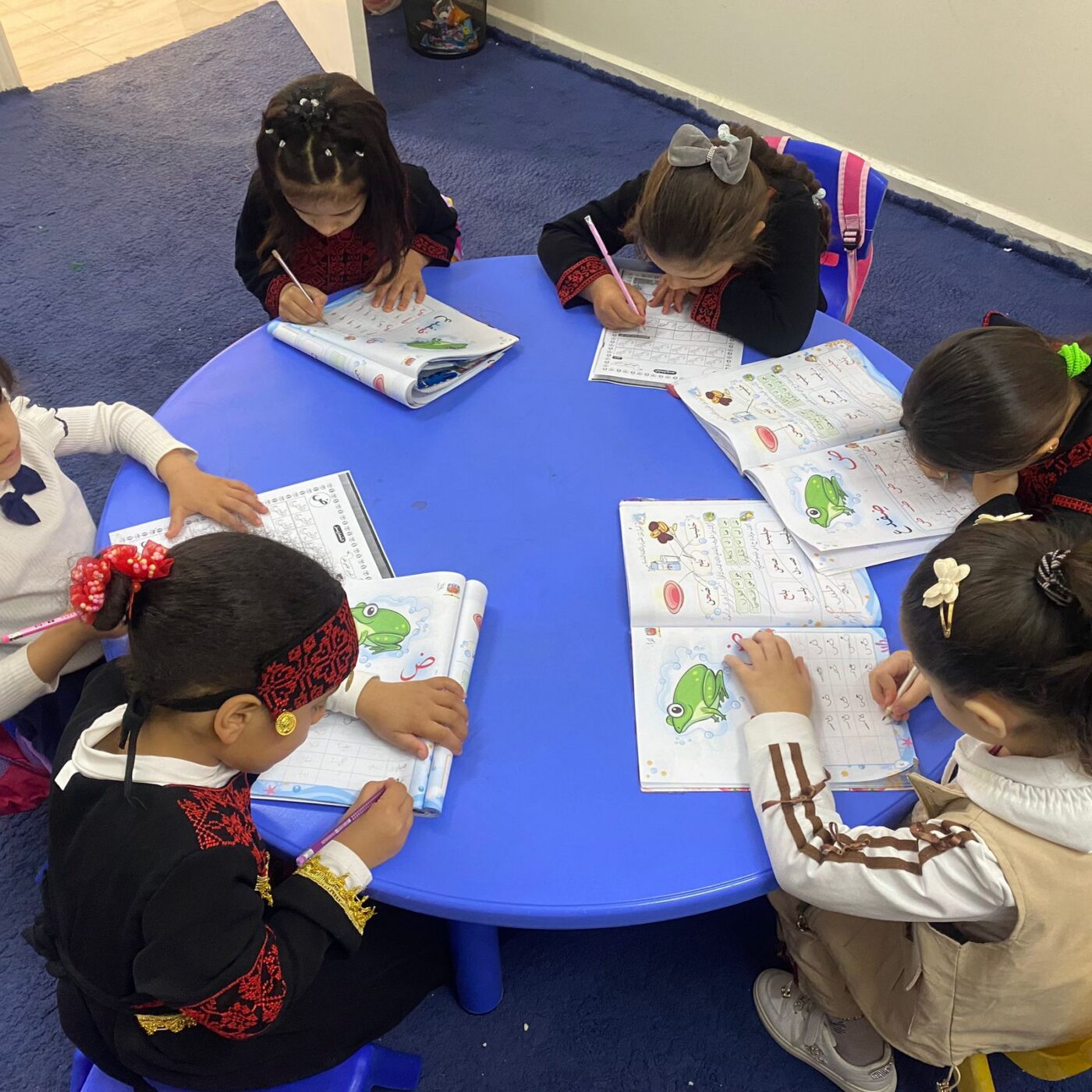
- The Safe Play and Learning Hub, implemented by Al Zaatari Charitable Society for Community Development, creates structured spaces where children aged 4-10 in Zaatari can learn, play, and build emotional resilience. Community facilitators, including mothers and local educators, are trained to deliver play-based learning sessions that support literacy, numeracy, and social-emotional development. The project also works with parents through practical workshops on positive parenting and home-based play, while developing a scalable toolkit to expand the model to other humanitarian settings.
In Lebanon:
- The Play, Learn & Heal Bus, implemented by Hilfswerk International, is a solar-powered mobile classroom delivering education and psychosocial support to children in conflict-affected villages in South Lebanon. The bus brings play-based learning directly to communities where schools and infrastructure have been disrupted, offering activities in language, mathematics, science and social-emotional development through games, storytelling, and hands-on learning. Caregivers also participate in sessions that help them support children’s learning and emotional well-being at home.
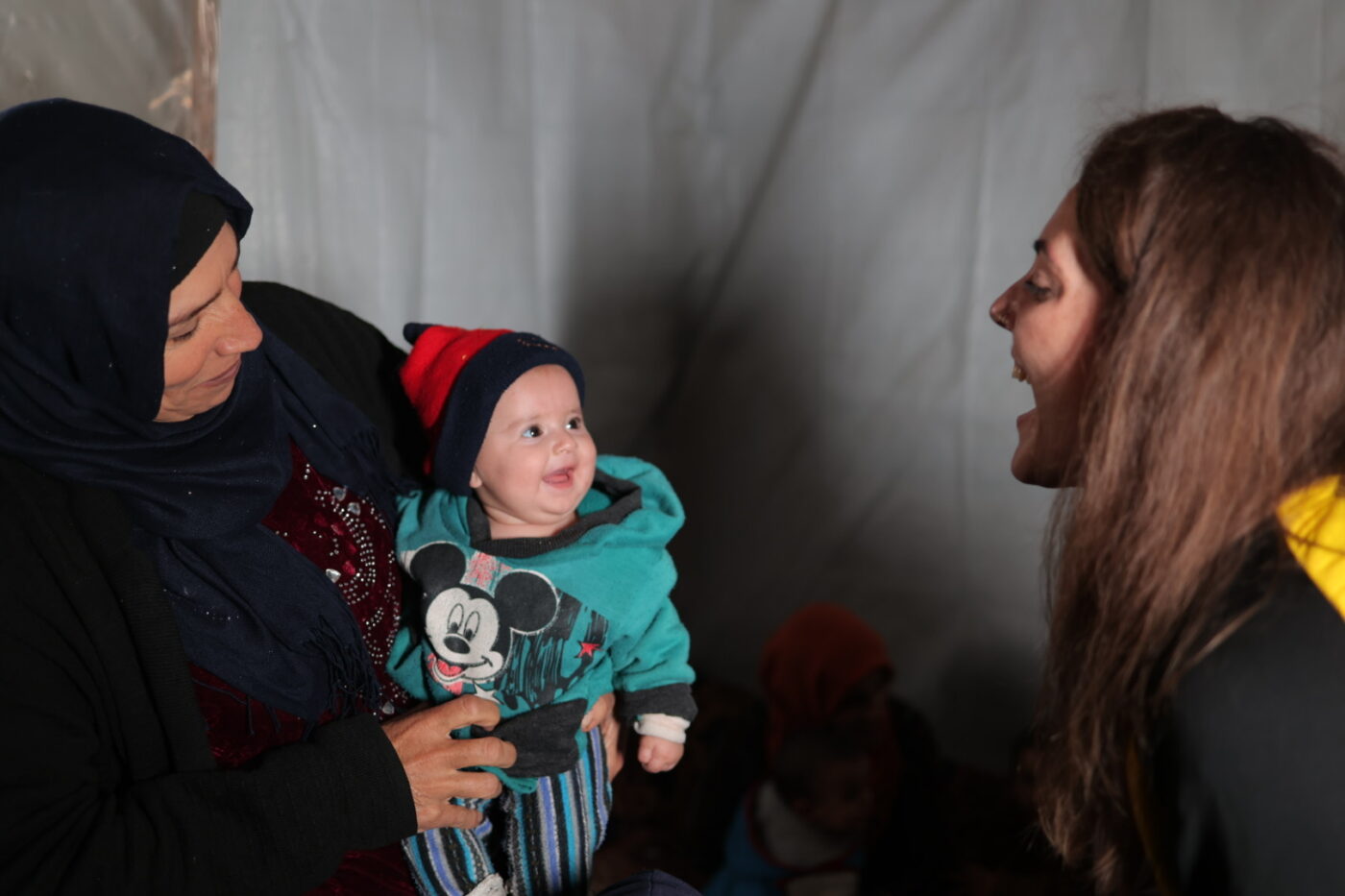
- SPARK-PY (STEAM-powered Activities for Resilience and Knowledge-Palestinian Youth), implemented by Azahir, supports Palestinian refugee children aged 8 – 12 in Nahrd al-Bared camp. Through structured after-school sessions and seasonal learning camps, children explore science, technology, engineering, arts, and mathematics while developing digital literacy strengthening community leadership and creating positive role models for younger children.
Across Jordan & Lebanon:
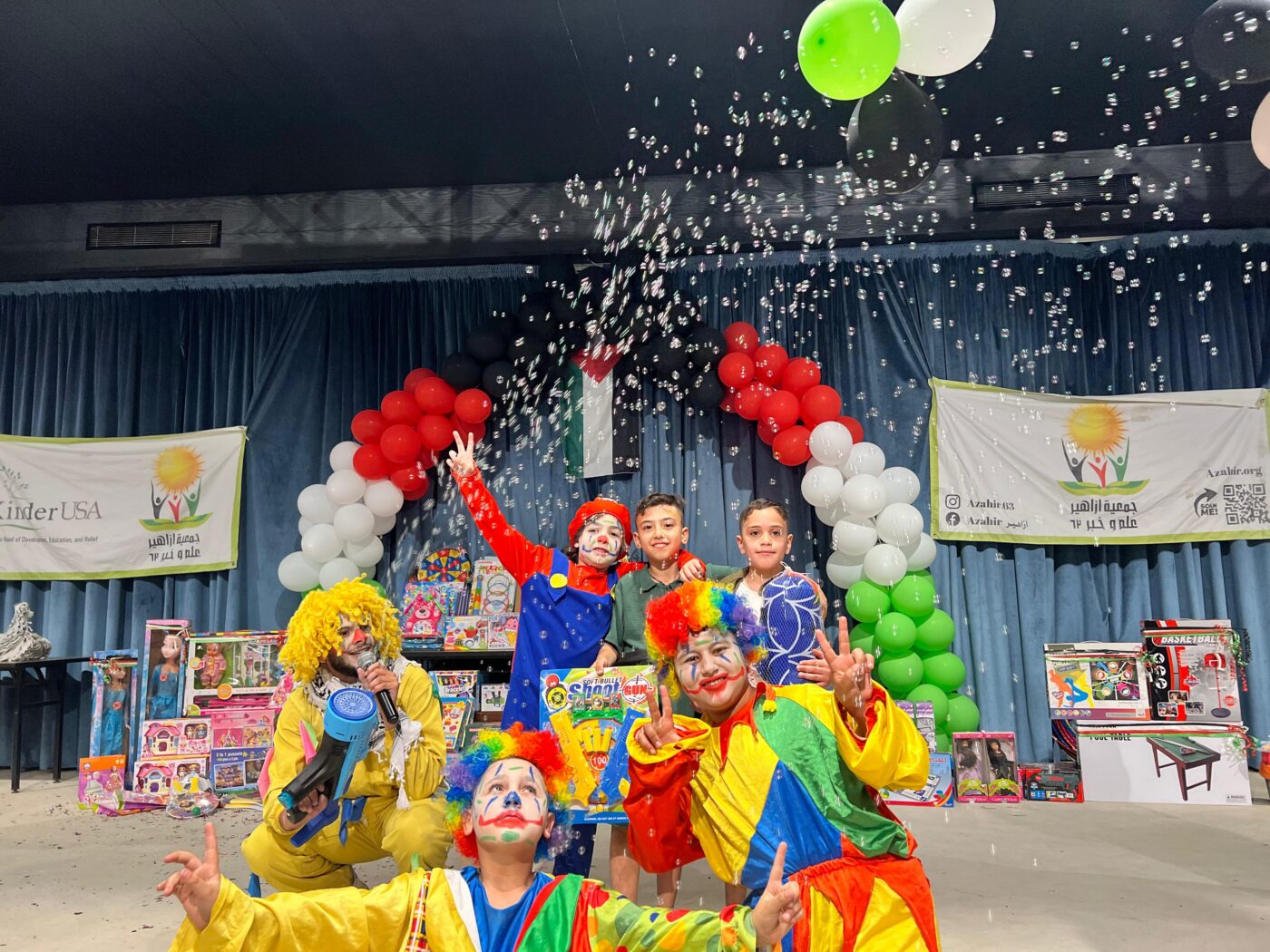
- STEMPlay, implemented by GAME, blends sports, STEM learning, and social-emotional development for children aged 6 – 12 in crisis-affected communities across Lebanon and Jordan. Youth leaders known as Playmakers facilitate activities that combine physical movement, hands-on experiments, and problem-solving challenges. The program strengthens children’s curiosity, confidence, and teamwork skills while also empowering young facilitators with leadership experience and employment pathways.
Building Brighter Futures Through Play-based Innovations in Kenya and Uganda
In Kenya and Uganda, many children grow up in communities affected by poverty, displacement, conflict, and limited access to inclusive education and early childhood learning opportunities.
Regional conflicts in neighbouring countries surrounding Uganda and Kenya are displacing large populations from their homes and countries. Uganda has one of the largest refugee populations in the world, hosting nearly 2 million refugees. In comparison, Kenya hosts over half a million (600,000) refugees.
In these complex settings, play-based solutions can provide a powerful pathway to support children’s development. We are investing in bold ideas from Uganda and Kenya that are creating inclusive, culturally relevant learning opportunities, and equipping educators and caregivers with tools that help children learn despite the barriers they face.
In Kenya:
- We Can Play, Learn and Thrive”: Inclusive Education for Children with Deafblindness, implemented by Sense International Kenya, is an initiative that aims to improve learning opportunities for children with deaf blindness and multi-sensory impairments across several crisis-affected regions of Kenya. The project links early hospital-based intervention with inclusive school environments that support play-based learning, specialized communication support, and tactile learning tools such as LEGO Braille Bricks. Teachers, learner support assistants, and caregivers receive training to strengthen inclusive education practices, while inclusive play centres serve as community hubs for learning and resources for children and their families.
In Uganda:
- The Playful Learning Toolkit for Education in Emergencies , implemented by Windle International Uganda, introduces a flexible play-based approach to early childhood development for children aged 2–6 in Kiryandongo Refugee Settlement in Uganda. Developed in collaboration with refugee communities, the toolkit integrates local culture into play activities through traditional songs, stories, rhymes, and dances that make learning engaging and familiar.
The project will also establish a peer-to-peer caregiver network to train parents and community members to facilitate playgroups that support children’s language development, cognitive growth, and social-emotional skills.
The innovations funded through our Play Learn Thrive portfolio highlight the importance of investing in strong support systems for children so that they can learn, play, and thrive even in the most complex settings. Play is far more than a recreational activity; it’s a powerful foundation for learning, healing, and long-term development.